Trimoryn Official Website › Journal › A Billion Colony Forming Units, And The Ten Billion The Trial Used
A Billion Colony Forming Units, And The Ten Billion The Trial Used
The two probiotic rows on this panel name their species, print their counts and leave out the one thing that would make the comparison exact.
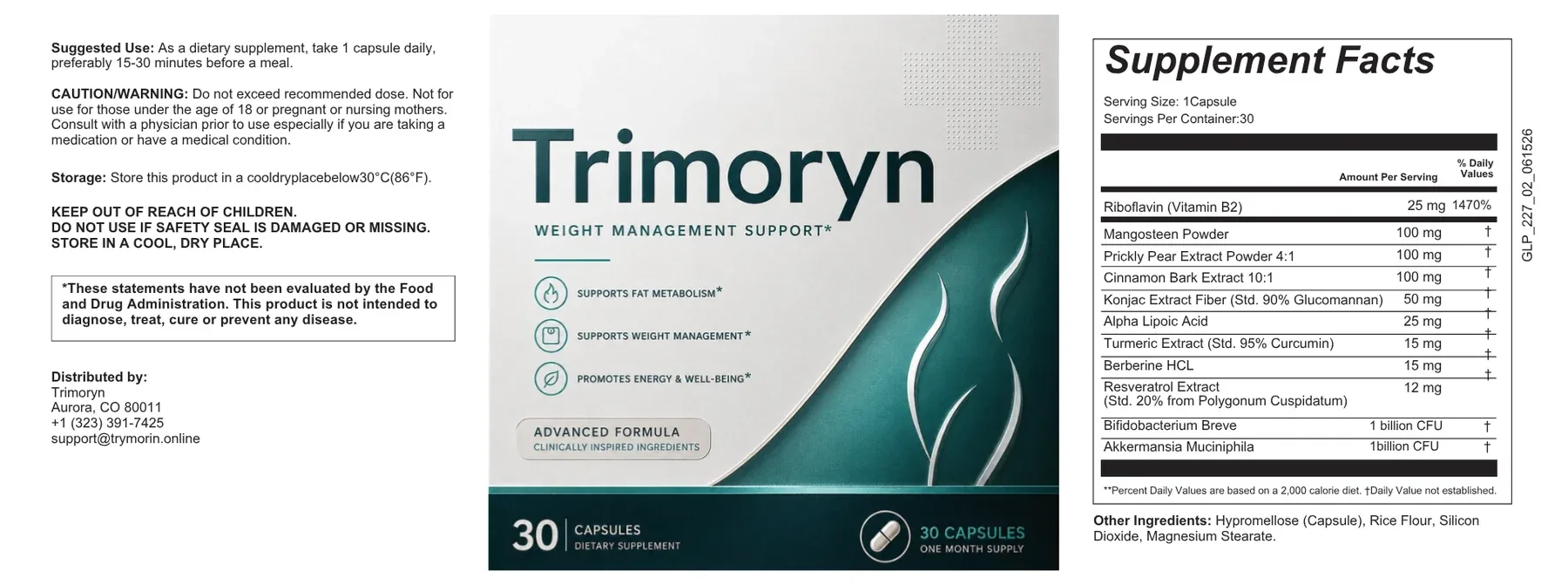
- The panel prints 1 billion CFU each for Bifidobacterium breve and Akkermansia muciniphila.
- The B. breve trial used 20 billion a day for twelve weeks. The Akkermansia study used 10 billion a day for three months.
- Neither row carries a strain designation, and probiotic effects are strain-specific.
- Naming two species with published trials is still more disclosure than a proprietary probiotic blend gives you.
The two rows, exactly as the panel prints them
Bifidobacterium Breve, 1 billion CFU, dagger. Akkermansia Muciniphila, 1 billion CFU, dagger. Those are the last two entries on the Trimoryn Supplement Facts panel and they are the only two measured in anything other than milligrams.
Three things are in those rows and one thing is missing. The species is named, which is more than several competitors manage. The count is printed, which is the number this article is about. The dagger is there because no Daily Value exists for a bacterium and never will. What is absent is a strain designation, and by the end of this piece that absence will look larger than the count does.
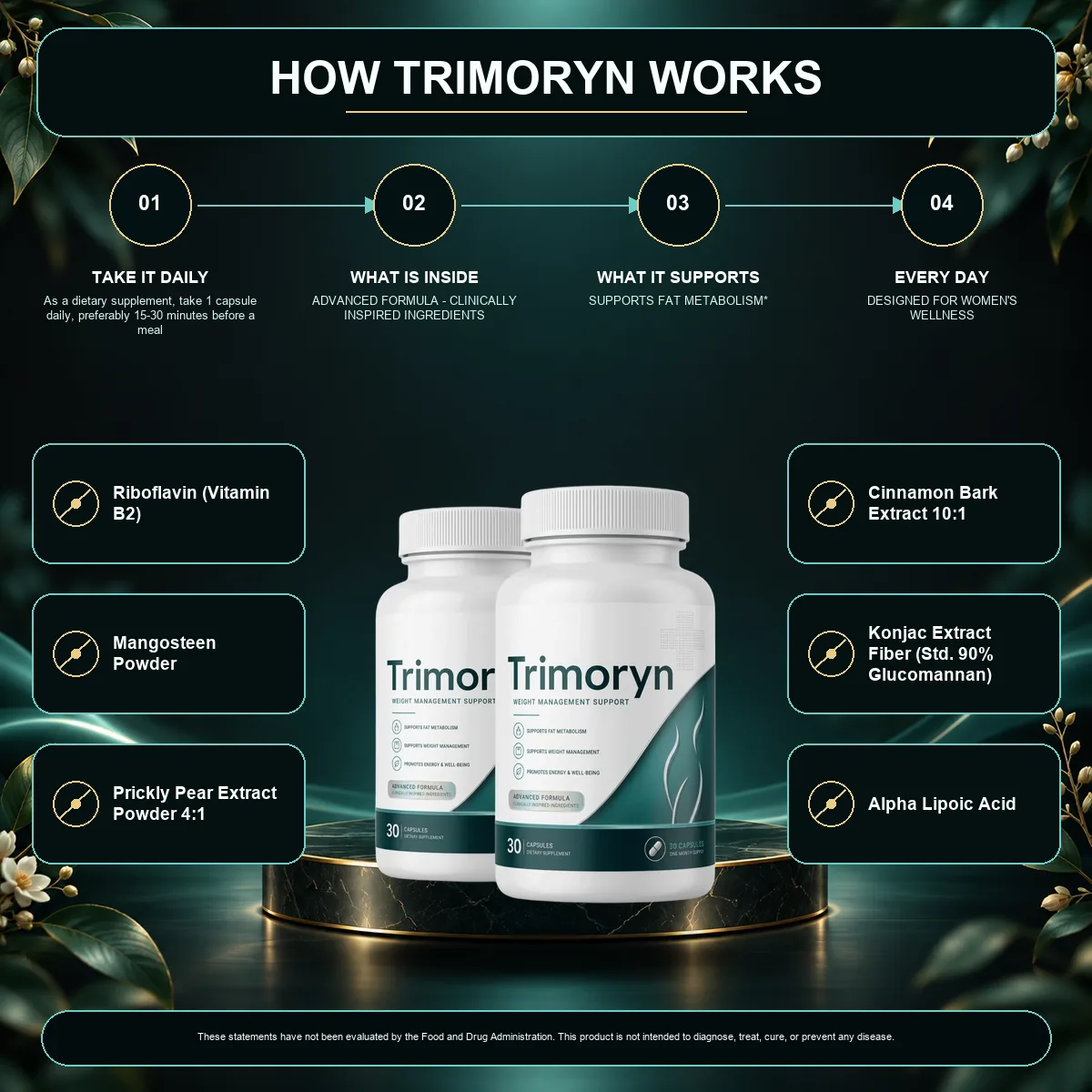
The seller's own mechanism section leans on these two rows harder than on anything else on the panel. Its third pillar is gut and daily wellness support, and both strains are named in it. So this is not a minor entry tucked at the bottom of a label; it is a third of the product's stated story.
What a colony forming unit actually counts
A colony forming unit is one bacterium capable of dividing into a visible colony on a plate. It is a count of living organisms rather than a mass, which is why a probiotic label gives billions where a botanical gives milligrams. A billion sounds enormous and it is worth putting next to two other numbers before it does any work on you.
The human large intestine carries something on the order of a hundred trillion bacteria. A single teaspoon of live yoghurt carries billions. So a billion colony forming units a day is a real dose of a specific organism and it is also a small addition to a very large population, and both of those things are true at once.
The number that decides whether it matters is not the absolute count. It is the count the research used, and for these two species that number is published.
The two trials behind these two species
Both species on this panel have a human trial behind them, which is unusual and is to the label's credit. Both trials used more than a billion.
The Bifidobacterium breve trial was randomised, double-blind and placebo-controlled, ran twelve weeks, and enrolled eighty pre-obese adults with a body mass index between 25 and 30. It used strain B-3 at 2 x 10^10 colony forming units a day, which is twenty billion. Body fat mass and percent body fat were lower in the probiotic group at weeks eight and twelve, and visceral fat area rose in the placebo group only. No serious adverse effects were noted.
The Akkermansia muciniphila study was published in Nature Medicine and is described by its own authors as a proof-of-concept exploratory study. Forty overweight, insulin-resistant volunteers were enrolled and thirty-two completed three months. The dose was 10^10 bacteria a day, which is ten billion, either live or pasteurised. The pasteurised form improved insulin sensitivity by 28.6%, cut insulinaemia by 34.1% and lowered total cholesterol by 8.7%. Body weight fell by 2.27 kg against placebo, which did not reach significance.
| What the trial used | What the panel prints | The ratio | |
|---|---|---|---|
| Bifidobacterium breve | 20 billion CFU a day, strain B-3, 12 weeks | 1 billion CFU, species only | one twentieth |
| Akkermansia muciniphila | 10 billion bacteria a day, 3 months | 1 billion CFU, species only | one tenth |
| Both, combined | 30 billion a day across two studies | 2 billion a day | one fifteenth |
Read the whole Trimoryn panel before you decide
Eleven entries, every amount printed, and the two probiotic rows in the context of the nine above them.
$49 to $79 a bottle · 60 days from purchase
Order TrimorynWhy the missing strain designation is the bigger problem
A species name is not an identifier in the way a reader assumes. Bifidobacterium breve is a species containing many strains, and the trial above used one of them: B-3. Another B. breve strain is a different organism for practical purposes, with different surface proteins, different metabolic products and, quite possibly, different effects.
NCCIH puts this plainly: the effects of probiotics are strain-specific, and evidence for one strain is not evidence for another of the same species. The NIH fact sheet on probiotics says the same thing at more length and adds the corollary, which is that a product naming only a genus or a species has not told you which organism it contains.
So the honest reading of these two rows is narrower than it looks. The panel tells you the species, and the species has a trial behind it, and the panel does not tell you whether the organism in the capsule is the one in the trial. That is a gap the label could close with four characters of print, and it has not.
This matters more for the Akkermansia row than for the Bifidobacterium one, because the Akkermansia work is newer and more specific. The Nature Medicine study used a particular preparation and found that the pasteurised form outperformed the live one, which is an unusual result and a strain-and-preparation finding rather than a species finding.
Where these two organisms came from
Bifidobacterium breve is an old acquaintance. It is one of the first colonisers of the infant gut, it has been in fermented dairy research for decades, and the B-3 strain used in the trial above was selected out of that work rather than discovered for it. A label naming B. breve is naming something with a long safety record and a broad literature, most of which is about digestion rather than about weight.
Akkermansia muciniphila is the opposite. It was first described in 2004, it was difficult to grow outside the gut for years afterwards, and it reached supplement labels through a run of observational findings: people with obesity, untreated type 2 diabetes or hypertension tend to carry less of it. It lives in the mucus layer of the intestinal wall and feeds on that mucus, which is an unusual niche and part of why it was slow to culture at all.
That history explains the shape of the evidence behind each row. The Bifidobacterium literature is broad and old; the Akkermansia literature is narrow, recent and headline-making, which is exactly the profile of an ingredient that reaches a panel before the dose question has been settled. Carrying both on one label is a reasonable commercial decision and it produces two rows with very different kinds of support behind them.
What a billion can still do
None of the above makes these rows worthless, and a piece that stopped here would be as unbalanced as the marketing it is correcting. Three points cut the other way.
- The category effect is small and consistent. A meta-analysis of 200 probiotic and synbiotic trials in 12,603 adults found reductions in body weight, body mass index, waist circumference, waist-to-hip ratio, fat mass and percent body fat. Small effects, but on six measures at once, across a very large pooled population.
- Colony counts are not linear. A probiotic is a living organism that may replicate after it arrives, which is not true of a botanical extract. The relationship between the count swallowed and the count established is not a simple proportion, and a tenth of a trial dose is not necessarily a tenth of a trial effect.
- Naming two species at all is disclosure. A great many multi-ingredient capsules carry a proprietary blend labelled "probiotic complex" with no species and no count. This panel gives both, and the quality page is where the rest of the label's disclosure is audited on the same basis.
What to do with this if the gut claim is why you are buying
Decide what you are buying it for, and let that decide the pack. The gut rows are the thinnest part of this panel against the published work, and the dosage comparison prints the fractions beside the four other entries in the same position. If the probiotics are the reason you are here, a single-strain product at ten to twenty billion with a strain designation printed on it is the more direct purchase, and it will cost less than this capsule does.
If the probiotics are a third of the reason, which is how the panel is actually arranged, the arithmetic is different. Three botanicals at 100 mg, a standardised fibre and a generous riboflavin dose are the front half of this label, and the ingredients page takes each one in turn.
And either way the sixty-day window is the thing that makes the decision reversible. It runs from the day the card is charged, it is longer than the three to six weeks buyers at this desk take to form a view, and the guarantee page has the four steps.
The one-line version
Two named species with real trials behind them, at a tenth and a twentieth of what those trials used, and without the strain designations that would make the comparison exact. That is a fair description of the back two rows of this panel and it is neither a scandal nor a selling point.
Sources cited in this article
- Minami J, Iwabuchi N, Tanaka M, Yamauchi K, Xiao JZ, Abe F, Sakane N. Effects of Bifidobacterium breve B-3 on body fat reductions in pre-obese adults: a randomized, double-blind, placebo-controlled trial. Biosci Microbiota Food Health. 2018;37(3):67-75. https://pubmed.ncbi.nlm.nih.gov/30094122/
- Depommier C, Everard A, Druart C, Plovier H, Van Hul M, Vieira-Silva S, Falony G, Raes J, Maiter D, Delzenne NM, de Barsy M, Loumaye A, Hermans MP, Thissen JP, de Vos WM, Cani PD. Supplementation with Akkermansia muciniphila in overweight and obese human volunteers: a proof-of-concept exploratory study. Nat Med. 2019;25(7):1096-1103. https://pubmed.ncbi.nlm.nih.gov/31263284/
- Saadati S, Naseri K, Asbaghi O, Yousefi M, Golalipour E, de Courten B. Beneficial effects of the probiotics and synbiotics supplementation on anthropometric indices and body composition in adults: A systematic review and meta-analysis. Obes Rev. 2024;25(3):e13667. https://pubmed.ncbi.nlm.nih.gov/38030409/
- National Center for Complementary and Integrative Health. Probiotics: Usefulness and Safety. https://www.nccih.nih.gov/health/probiotics-what-you-need-to-know
- NIH Office of Dietary Supplements. Probiotics: Fact Sheet for Health Professionals. https://ods.od.nih.gov/factsheets/Probiotics-HealthProfessional/