Trimoryn Official Website › Journal › The Order Page Says Women Over 40. The Bottle Says Adults Over 18.
The Order Page Says Women Over 40. The Bottle Says Adults Over 18.
Where a sales page and a printed label disagree about who a supplement is for, the label governs. On this product the label is the wider of the two.
- The seller's order page is titled for women over 40. The label restricts by age and by condition only.
- The caution block excludes anyone under 18 and anyone pregnant or nursing, and says nothing about sex.
- The trials behind this panel enrolled mixed adult populations, with one exception in women.
- This website describes it as a capsule for adults over 18, which is what the bottle supports.
Two documents, two audiences
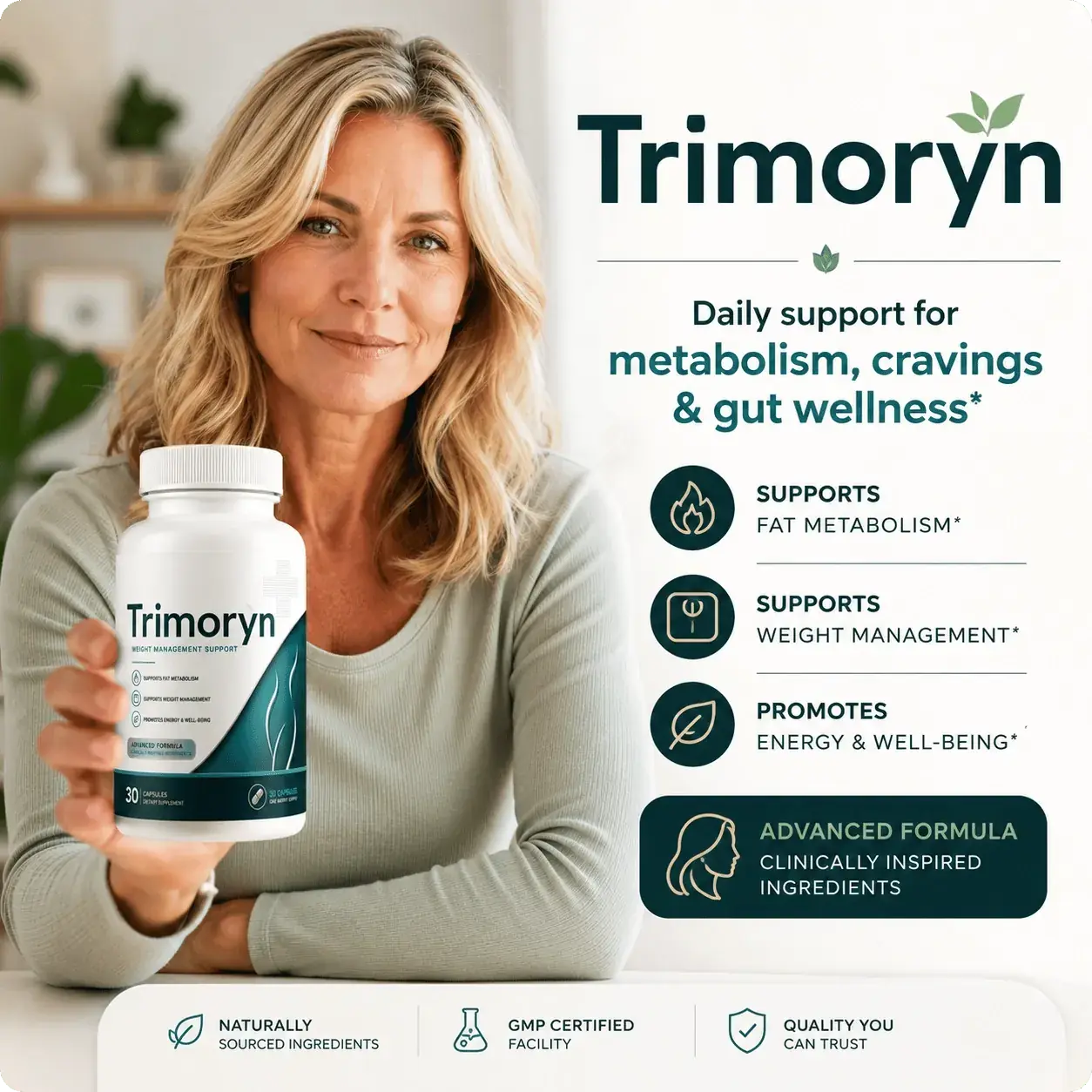
The Trimoryn order page is titled for women over forty and the framing runs through everything on it: the headline, the reasons to buy, the photography and every testimonial on it. The printed bottle says nothing about sex at all. Both statements are true and only one of them is a restriction.
| What it states | What it restricts | Status | |
|---|---|---|---|
| The seller's order page | designed for women over 40, metabolism and gut health | nothing by age or condition in the headline | marketing framing |
| The printed bottle | not for those under 18 or pregnant or nursing; consult a physician if taking medication or managing a condition | age and condition, not sex | the label, and it governs |
| The product documentation for this desk | adults, 18 and over, follow the label | age only | agrees with the bottle |
| This website | a capsule for adults over 18 | age and condition, following the label | what these pages say |
What the bottle restricts, exactly
The caution block on the Trimoryn label reads, in full: do not exceed recommended dose; not for use for those under the age of 18 or pregnant or nursing mothers; consult with a physician prior to use especially if you are taking a medication or have a medical condition.
That is three restrictions and a dose instruction. Age is one. Pregnancy and nursing is two, and it is a condition rather than a statement about sex: it excludes a specific state, not a category of person. The third is conditional rather than absolute, and it points at a conversation rather than a prohibition.
Nothing in it says the product is for women, or that it is not for men, or that it works differently in either. A label is the most tightly regulated surface a supplement has and its silences are as deliberate as its statements.
Why the marketing narrows it anyway
Narrowing an audience is ordinary commercial practice and it is not, in itself, dishonest. A page written for one reader is more persuasive than a page written for everybody, and a product positioned for women over forty is competing in a narrower and better-defined market than one positioned for adults.
It becomes a problem in two specific ways, and both are worth naming.
- It can imply a mechanism that does not exist. A page addressed to women over forty invites the inference that something on the panel acts on the physiology of that group specifically. Nothing on this panel does. Riboflavin, a viscous fibre, four botanical extracts and two gut strains behave the same way in anybody.
- It can obscure the restrictions that do apply. The pregnancy and nursing exclusion is the most important line in the caution block and it is the one a reader is least likely to see on a page whose framing is already about a particular demographic.
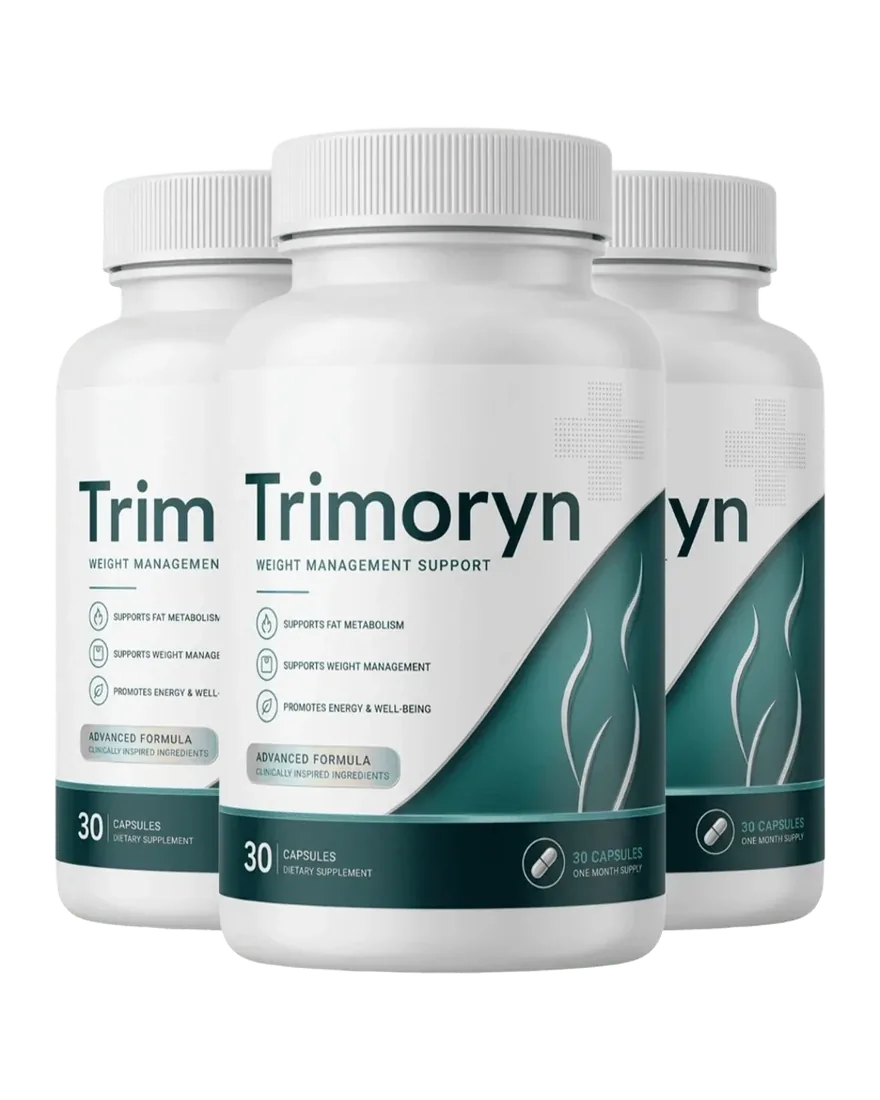
Read what the Trimoryn label restricts, in full
The caution, the suggested use and the storage line quoted exactly as the bottle prints them.
$49 to $79 a bottle · 60 days from purchase
Order TrimorynWhat this desk own reviewers look like
A small piece of evidence sits on this website pointing the same way, and it arrived by accident rather than by design. The eight buyers this desk publishes in full are all men: Chris, Alan, Stan, Chris, Tony, Pete, Kevin and Nick, aged 41 to 59, writing between day 16 and day 59 of taking it.
Every testimonial on the seller order page is signed by a woman. Two desks, two rosters, and no overlap at all between them. Neither set is representative of very much: eight people is eight people, and a review page is a self-selected sample collected by whoever thought to ask. But two self-selected samples with no overlap are a fair hint that this capsule is bought by a wider group than the marketing addresses.
The honest thing to do with an observation like that is print it rather than balance it. Nobody here is going to adjust a roster to match a sales page, and the reviews page carries the same note beside the same eight names and the same day counts.
What the research populations actually were
The studies cited across this website enrolled a mixture, and one of them is worth pulling out because it is the closest thing to the seller's own framing.
The mangosteen pilot enrolled 22 obese female patients with insulin resistance and ran 26 weeks. That is a trial in women specifically, and it found a large improvement in insulin sensitivity. It is also a pilot study of twenty completers, described as preliminary by its own authors, and its dose is not stated in the record.
The glucomannan trial enrolled 53 adults aged 18 to 65 of both sexes. The Akkermansia study enrolled overweight, insulin-resistant volunteers of both sexes. The Bifidobacterium breve trial enrolled 80 pre-obese adults. None of those reports an effect specific to one sex, and none was designed to look for one.
So the evidence base behind this panel is a mixed adult population, which is exactly what the label's own restriction describes. The marketing is narrower than the research and the label is the same width as it.
What this changes for a reader
Very little about the capsule and quite a lot about how to read the page you bought it from. Three practical consequences.
- If you are a man reading a page addressed to women, nothing on the panel is wrong for you. Riboflavin, a viscous fibre, four botanical extracts and two gut strains behave the same way in anybody, and the label restricts by age and condition rather than by sex. The marketing is narrow; the product is not.
- If you are pregnant or nursing, the exclusion is absolute and it is easy to miss. It sits in a caution block on the back of the bottle rather than in the headline of a page written for women. That is the single most important line in this whole article.
- If you take a prescription, the conditional restriction applies to you whoever you are. Berberine is the entry that matters most and the safety page sets out why in detail.
There is a wider habit in this too. Whenever a supplement page addresses a demographic, the useful question is whether anything on the panel acts on that demographic specifically. Sometimes the answer is yes and the ingredient list shows it. Here the answer is no, and the framing is a marketing decision rather than a formulation one.
The same test applies to age, to activity level and to any other audience a page names. The twelve-row checklist does not have a row for it, because it is a question about the page rather than about the bottle, and it belongs with the reader rather than with the label.
Who this desk says it is for
Adults over 18, not pregnant or nursing, who want one small fixed thing in the day rather than a regime, and who are prepared to wait three to six weeks before deciding anything. That is the description used throughout this website and it is the label's description rather than the seller's.
Two things follow from choosing the narrower document.
- Nothing here addresses a reader by sex. Not in the hero, not in the benefits, not in the FAQ. The who-it-is-for page carries five reasons it fits and five reasons it does not, and none of them is about who you are.
- The seller's framing is quoted where the framing is the subject. It appears on that page and on this one, attributed, because a reader who arrives from the order page deserves to know why the two documents read differently.
The published review roster is a small piece of evidence in the same direction. Eight buyers, all of them men, writing to a desk selling a product marketed to women. Two different sets of buyers writing to two different desks, and the reviews page prints that observation rather than quietly balancing the names.
The one-line version
Where a sales page and a bottle disagree about who a product is for, the bottle is the document that arrives, the document that is regulated and the document that governs. On this product the bottle is the wider of the two, which is the unusual direction for that disagreement to run.
What the label says about everything else, including the suggested use and the storage line, is on the label page.
Sources cited in this article
- Watanabe M, Gangitano E, Francomano D, Addessi E, Toscano R, Costantini D, Tuccinardi D, Mariani S, Basciani S, Spera G, Gnessi L, Lubrano C. Mangosteen Extract Shows a Potent Insulin Sensitizing Effect in Obese Female Patients: A Prospective Randomized Controlled Pilot Study. Nutrients. 2018;10(5). https://pubmed.ncbi.nlm.nih.gov/29747432/
- Keithley JK, Swanson B, Mikolaitis SL, DeMeo M, Zeller JM, Fogg L, Adamji J. Safety and efficacy of glucomannan for weight loss in overweight and moderately obese adults. J Obes. 2013;2013:610908. https://pubmed.ncbi.nlm.nih.gov/24490058/
- Depommier C, Everard A, Druart C, Plovier H, Van Hul M, Vieira-Silva S, Falony G, Raes J, Maiter D, Delzenne NM, de Barsy M, Loumaye A, Hermans MP, Thissen JP, de Vos WM, Cani PD. Supplementation with Akkermansia muciniphila in overweight and obese human volunteers: a proof-of-concept exploratory study. Nat Med. 2019;25(7):1096-1103. https://pubmed.ncbi.nlm.nih.gov/31263284/
- Minami J, Iwabuchi N, Tanaka M, Yamauchi K, Xiao JZ, Abe F, Sakane N. Effects of Bifidobacterium breve B-3 on body fat reductions in pre-obese adults: a randomized, double-blind, placebo-controlled trial. Biosci Microbiota Food Health. 2018;37(3):67-75. https://pubmed.ncbi.nlm.nih.gov/30094122/