Trimoryn Official Website › Journal › What Do Mangosteen, Prickly Pear and Cinnamon Add to Trimoryn at 100 mg Each?
What Do Mangosteen, Prickly Pear and Cinnamon Add to Trimoryn at 100 mg Each?
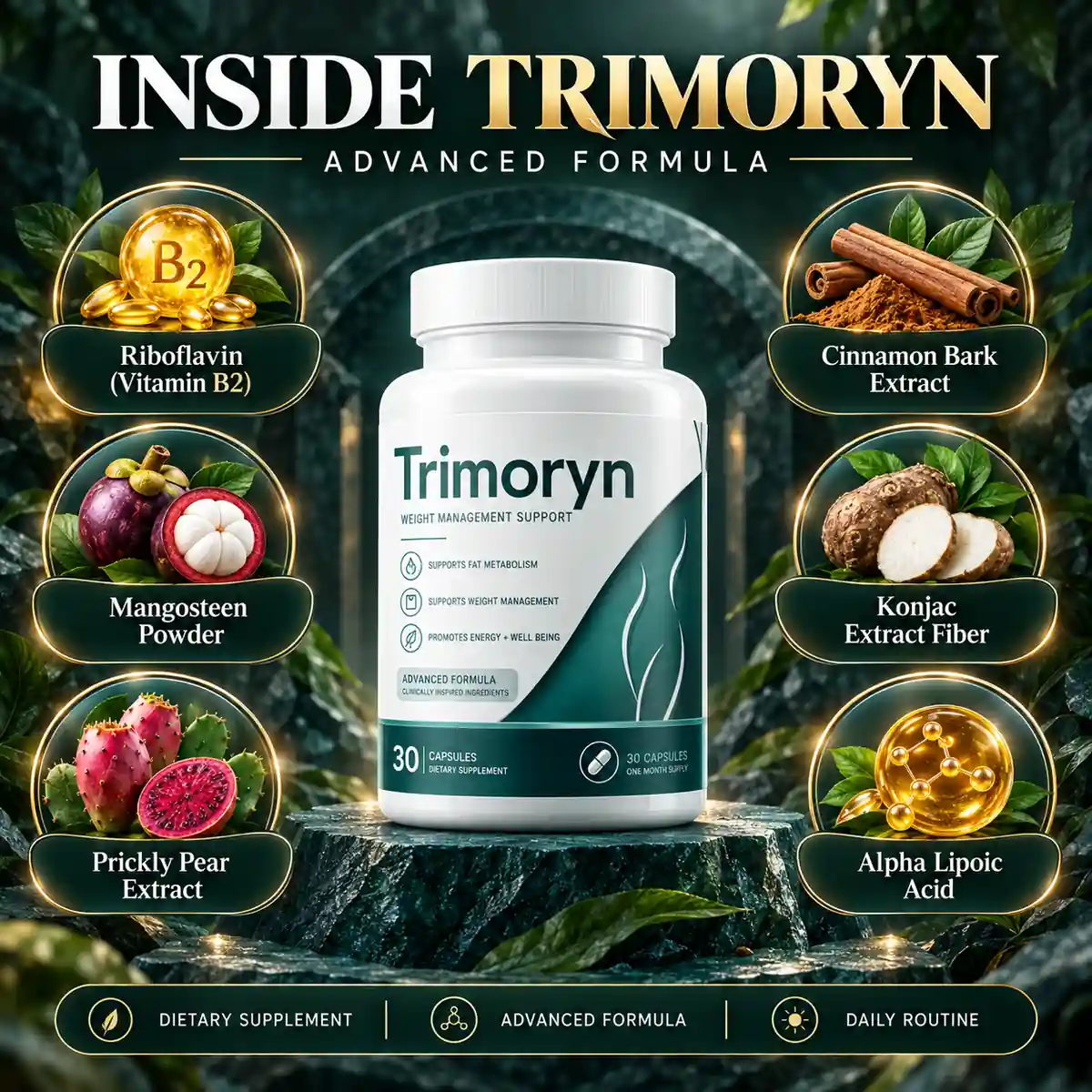
Mangosteen powder, prickly pear extract 4:1 and cinnamon bark extract 10:1 are the joint-largest Trimoryn entries, at 100 mg each. Each has a small or mixed study record, none tested the finished capsule, and the label names no cinnamon species and no mangosteen plant part. Cinnamon is the one with the firmest blood sugar research.
Why do three plants share the top spot at 100 mg?
On the Trimoryn panel, three botanicals sit at 100 mg each. They are mangosteen powder, prickly pear extract powder 4:1 and cinnamon bark extract 10:1. They are the joint-largest entries by weight. Riboflavin and alpha lipoic acid are 25 mg each, the konjac fibre is 50 mg, and the rest are smaller.
Size on a label is not strength, though. The three are written in different ways. One is whole fruit powder. Two are concentrated extracts with a ratio. That changes what 100 mg stands for, and it is where this page starts.
- Mangosteen Powder: 100 mg, whole fruit powder with no ratio and no marker compound.
- Prickly Pear Extract Powder 4:1: 100 mg, about 400 mg of cactus.
- Cinnamon Bark Extract 10:1: 100 mg, about a gram of bark.
- All three carry a dagger on the panel: Daily Value not established.
- The label names no cinnamon species and no mangosteen plant part.
- No trial of the finished capsule is published.
| Entry | Form | What 100 mg corresponds to | Not stated on the label |
|---|---|---|---|
| Mangosteen Powder | Whole fruit powder | 100 mg of powder; no ratio applies | Plant part, marker compound |
| Prickly Pear Extract Powder 4:1 | Extract, four parts plant to one | About 400 mg of cactus | Which compounds survived the extraction |
| Cinnamon Bark Extract 10:1 | Extract, ten parts bark to one | About a gram of bark | Species, such as Ceylon or cassia |
What does mangosteen add to Trimoryn?
Mangosteen is a tropical fruit. Its outer rind carries a family of compounds called xanthones. On this panel it is the only botanical given as whole fruit powder and not an extract. That means there is no concentration ratio and no standard marker to check. The only honest thing to say about its strength is that the label states 100 mg of powder.
The research the site cites is a small one. A 26-week randomised pilot study gave 22 women with insulin resistance either behavioural therapy alone or behavioural therapy with a mangosteen extract. Insulin resistance improved markedly more in the extract group, and no side effect was linked to the treatment. Twenty women finished. The authors call it preliminary.
Note the gap. The pilot used an extract, and the panel gives a powder. And it studied women with insulin resistance, who are not the same as every adult reading this. It is a hint, not a result for the capsule.
What does prickly pear add to Trimoryn?
Prickly pear is the cactus Opuntia ficus-indica. The interesting property is mechanical rather than chemical: its fibre binds some dietary fat in the gut. A double-blind, randomised, placebo-controlled cross-over trial in 20 healthy adults on a set meal plan with 35% fat measured the fat in stool directly. It found 15.8% with cactus fibre against 4.6% with placebo.
The detail that matters is the dose. That trial used two tablets three times a day with meals, which is far more material than 100 mg once a day. So the capsule is not a fat blocker in any strong sense, and this site says so. A systematic review of prickly pear products also looked at blood sugar and is open about how varied the published trials are.
If you want to see these entries on the seller's own listing and order page, both are one click away.
See today’s price and guarantee
This website is commercial and earns from orders placed through the button. Prices were read on 19 September 2026, so check the checkout.
What does cinnamon add to Trimoryn?
Cinnamon bark extract at 10:1 is the most concentrated ratio on the panel. At 100 mg it stands in for about a gram of bark. That puts it inside the range the published work uses, rather than far below it, unlike several other entries.
A 2024 dose-response meta-analysis of 24 randomised trials found significant falls in fasting blood sugar, insulin resistance and HbA1c in people with type 2 diabetes. It found no significant change in serum insulin. An umbrella meta-analysis that pooled seven earlier reviews looked at body measures instead of blood sugar.
Two cautions apply. The first is that the strongest finding is about blood sugar in people with diabetes, not about weight in healthy adults. The second is that the label names no species. NCCIH explains why this matters: cassia cinnamon carries coumarin, and the panel does not say which cinnamon it uses.
Do the three together make a difference?
The panel points at everyday metabolism, and these three are part of the pointing. But no study tested them together, and no study tested the capsule. The site makes no weight-loss claim. What it offers is a plain comparison of each entry with its own record.
In order of how firm the record is for what the entry is said to do: cinnamon has the clearest pooled evidence, though for blood sugar in people with diabetes. Prickly pear has one neat but small trial at a much bigger dose. Mangosteen has a small, early pilot. That is the honest ranking.
Who should ask a doctor about these three?
Anyone who takes a medicine or manages a medical condition, as the label says. In particular, if you take a medicine for blood sugar, cinnamon is one of three entries with blood sugar research behind it, with berberine and the konjac fibre. The effects could add up, so tell your prescriber.
Anyone under 18, pregnant or nursing should not take the capsule at all. This is general information and not medical advice.
What is not published about these three entries?
- The cinnamon species. The label says cinnamon bark extract and stops there.
- The mangosteen plant part. The label says powder and does not say which part of the fruit.
- How the extracts were made, and which compounds they hold.
- Any lot-specific lab result for the amount in your capsule.
- Any trial showing what 100 mg of each does inside this capsule.
The site asks the seller about the first two and prints the answer if it comes. Nothing has come back so far.
Frequently asked questions
- How much mangosteen is in Trimoryn?
- One hundred milligrams of mangosteen powder per capsule. It is whole fruit powder, so it has no extract ratio.
- What does 4:1 mean on the prickly pear in Trimoryn?
- Four parts of raw cactus were reduced to one part of extract, so 100 mg corresponds to about 400 mg of cactus.
- What does 10:1 mean on the cinnamon in Trimoryn?
- Ten parts of bark to one part of extract, so 100 mg corresponds to about a gram of bark.
- Which cinnamon is in Trimoryn?
- The label does not say. It names cinnamon bark extract 10:1 and gives no species, such as Ceylon or cassia.
- Does prickly pear in Trimoryn block fat?
- Not in any strong sense. The trial that measured fat binding used a much larger amount than 100 mg once a day.
- Do these three ingredients help with blood sugar?
- Cinnamon has the firmest research, in people with type 2 diabetes. No claim is made for Trimoryn, and anyone on blood sugar medicine should ask a physician first.
Safety note
This page is general information, not medical advice. Trimoryn is a dietary supplement. It is not FDA approved, no supplement is, and it is not a treatment for any condition. The label says it is not for anyone under 18 or anyone pregnant or nursing. If you take a medicine or have a medical condition, talk to a physician before you start.
Our view
The three biggest botanicals on the Trimoryn panel are really three different stories. Cinnamon has real pooled research, aimed at blood sugar. Prickly pear has one tidy fat-binding trial at a larger dose. Mangosteen has an early pilot.
None of that proves what the capsule does, and the label leaves out details a careful buyer would like to have. Read the panel as a list of well-meant inclusions, ask your doctor if you take a medicine, and use the 60-day window to see what you notice for yourself.
Today's packs and the 60-day wording are on the seller's page, shown beside the full panel.
See today’s price and guarantee
This website is commercial and earns from orders placed through the button. Prices were read on 19 September 2026, so check the checkout.