Trimoryn Official Website › Journal › What Does the Trimoryn Supplement Facts Label Say, and How Do You Read It?
What Does the Trimoryn Supplement Facts Label Say, and How Do You Read It?
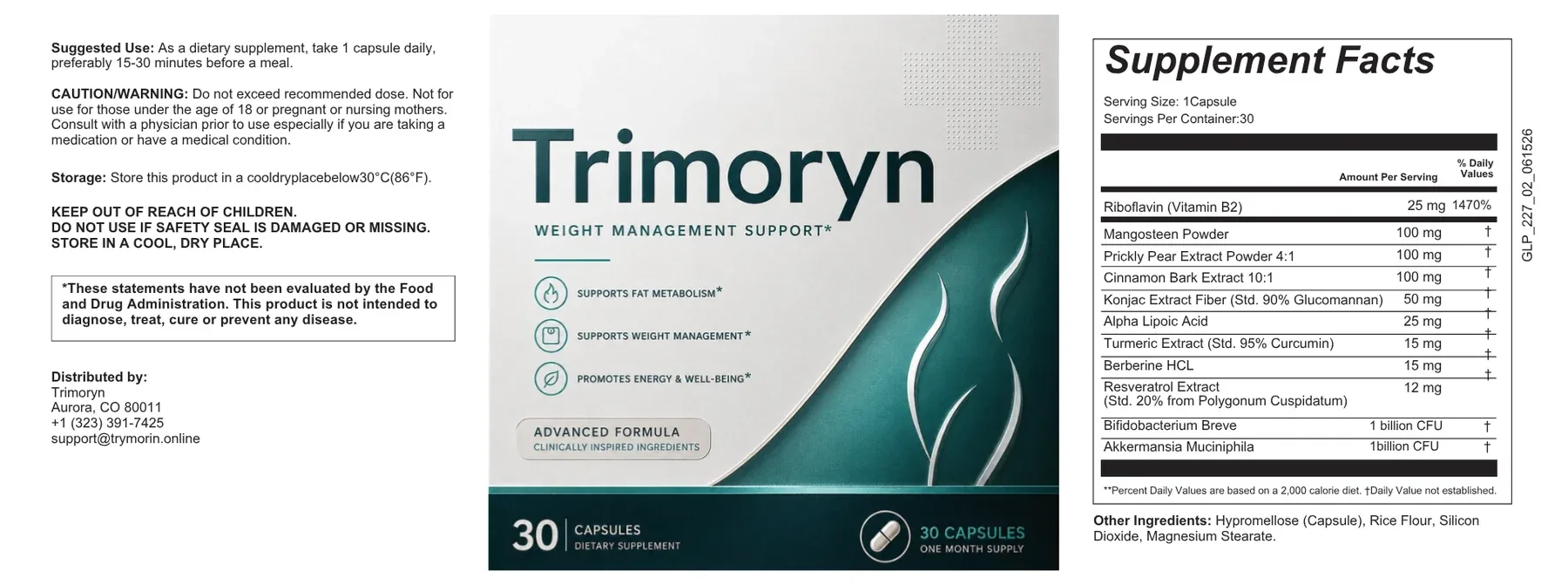
The Trimoryn Supplement Facts panel lists a serving size of one capsule, 30 servings a container, and 11 named entries with an amount for each. Only riboflavin has a percent Daily Value, 1,470%. The other ten carry a dagger, which means no Daily Value is set. Four other ingredients are listed after the panel.
What does the Trimoryn Supplement Facts label say?
A Supplement Facts panel is the legal part of the bottle. The front can say what it likes in marketing words, but the panel is where amounts have to be printed. For Trimoryn the panel is short and clear. It names 11 entries and gives an amount beside each one. There is no hidden blend total.
Everything below is read from the label artwork supplied with the product, not from a sales page. Where a sales page and the panel disagree, the panel wins.
| Entry | Amount per capsule | % Daily Value |
|---|---|---|
| Riboflavin (Vitamin B2) | 25 mg | 1,470% |
| Mangosteen Powder | 100 mg | † |
| Prickly Pear Extract Powder 4:1 | 100 mg | † |
| Cinnamon Bark Extract 10:1 | 100 mg | † |
| Konjac Extract Fiber (Std. 90% Glucomannan) | 50 mg | † |
| Alpha Lipoic Acid | 25 mg | † |
| Turmeric Extract (Std. 95% Curcumin) | 15 mg | † |
| Berberine HCL | 15 mg | † |
| Resveratrol Extract (Std. 20% from Polygonum Cuspidatum) | 12 mg | † |
| Bifidobacterium Breve | 1 billion CFU | † |
| Akkermansia Muciniphila | 1 billion CFU | † |
- Serving size is 1 capsule. Servings per container is 30.
- 11 entries, each with a printed amount.
- Riboflavin is the only entry with a percent Daily Value.
- The other ten carry a dagger: Daily Value not established.
- Other ingredients: hypromellose (capsule), rice flour, silicon dioxide, magnesium stearate.
- The panel names no strain for either probiotic and no species for the cinnamon.
What do the serving size and the servings per container tell you?
Two lines sit above the table, and they decide how every other number is read. A Supplement Facts panel states amounts per serving. On many products a serving is two gummies or a scoop, and a person who takes one gets half of every figure. Here the serving is one capsule, so the panel and the dose are the same thing.
The second line, 30 servings a container, is what turns a bottle into a month at the label dose. It is also why the cost a day on the pricing page is arithmetic and not a claim. A consequence worth noting: because a serving is one capsule, there is no smaller dose to take.
What does the dagger on ten of the entries mean?
It is the standard mark for an ingredient with no Daily Value set. It is not a warning, and it is not an admission that something is missing. A percent Daily Value only exists where an official reference intake exists, which is why it shows up once on this panel and not eleven times.
The result is that ten of the 11 amounts cannot be read as a share of anything. They can only be compared with the amounts used in published work. This site does that for six entries, on its home page, and the answer is not always flattering to the product.
Riboflavin deserves a line. At 1,470% it looks alarming next to a multivitamin. The NIH fact sheet records that no upper intake level has been set for it, because harm from high intakes has not been reported. Bright yellow urine is the usual sign, and it is harmless.
If you want to compare the label with the order page yourself, the seller's page shows the packs and the guarantee.
See today’s price and guarantee
This website is commercial and earns from orders placed through the button. Prices were read on 19 September 2026, so check the checkout.
How do you read 4:1, 10:1 and Std. on the label?
Three entries carry a ratio, and four carry a standardisation or none. A ratio is not a dose. It says how much raw plant went into one part of extract. A standardisation is a stronger claim, because it names the share of one compound.
| Label wording | What it means in plain terms |
|---|---|
| Prickly Pear Extract Powder 4:1, 100 mg | Four parts of plant to one of extract, so about 400 mg of cactus |
| Cinnamon Bark Extract 10:1, 100 mg | Ten parts to one, so about a gram of bark |
| Konjac Extract Fiber, Std. 90% Glucomannan, 50 mg | Nine tenths is the fibre itself, which is 45 mg |
| Turmeric Extract, Std. 95% Curcumin, 15 mg | 14.25 mg of curcumin |
| Resveratrol Extract, Std. 20%, 12 mg | 2.4 mg of resveratrol |
| Mangosteen Powder, 100 mg | Whole powder, so no ratio and no marker compound |
A ratio also says nothing about which compounds survived the extraction. So treat it as a size guide, not as a promise of strength. Where a panel prints a standardisation, a reader can compare the entry with a published trial. Where it prints only a ratio, or nothing, they cannot.
What does the Trimoryn label leave out?
Four useful things are not on the panel, and a careful reader should know about them. The probiotics are named to the species, not to a strain, and the studies on probiotics are strain-specific. The cinnamon has no species named, so whether it is Ceylon or cassia is not stated. The mangosteen has no plant part named. And no manufacturing facility is named.
Nor is there a lot-specific certificate of analysis. The certificate reference printed for the lot, TRI-2941-26-GO, is a label reference and not a laboratory report. The lot code, TRI-26/GO-2941, tells you which production run a bottle belongs to. It is a serial number, not a purity test.
What else is printed on the bottle besides the panel?
The left side of the artwork carries the suggested use, the caution and the storage line. The suggested use is the one-sentence dose already covered. The caution reads: do not exceed recommended dose; not for use for those under the age of 18 or pregnant or nursing mothers; consult with a physician prior to use especially if you are taking a medication or have a medical condition.
The storage line asks for a cool, dry place below 30 degrees Celsius, which is 86 degrees Fahrenheit, away from children, and says not to use the product if the safety seal is damaged or missing. The front prints weight management support, three support lines and an asterisk pointing to the statement that the lines have not been evaluated by the Food and Drug Administration.
Why do some pages name six, ten or eleven ingredients?
Because there are three different documents. The vendor's listing graphics put six ingredients in circles round a bottle. The seller's order page names ten and leaves riboflavin out. The printed panel names all 11. None of them is wrong. They are a marketing selection, a sales-page selection and the bottle.
If you compare two pages and the counts differ, go back to the panel. It is the only one of the three with an amount beside every name. The seller's photos also show berries, citrus, mint and green coffee beans. None of those is an ingredient.
Frequently asked questions
- What is the serving size on the Trimoryn label?
- One capsule. The panel gives 30 servings per container, so a bottle is 30 days at one capsule a day.
- How many ingredients are on the Trimoryn label?
- Eleven named entries, each with an amount. Four other ingredients follow: hypromellose, rice flour, silicon dioxide and magnesium stearate.
- Why does the Trimoryn label show 1,470% for riboflavin?
- Because 25 mg is far above the adult reference intake. No upper intake level has been set for riboflavin, and the usual sign of a large dose is bright yellow urine.
- What does the dagger on the Trimoryn label mean?
- It marks an entry whose Daily Value has not been established. It is the normal mark for such an entry, not a warning.
- Does the Trimoryn label name the probiotic strains?
- No. It names the species Bifidobacterium breve and Akkermansia muciniphila at 1 billion CFU each, without a strain designation.
- Is the Trimoryn label proof of what is in the capsule?
- It is the maker's statement. No lot-specific certificate of analysis is published, and the lot code and certificate reference are label references, not lab proof.
Safety note
This page is general information, not medical advice. Trimoryn is a dietary supplement. It is not FDA approved, no supplement is, and it is not a treatment for any condition. The label says it is not for anyone under 18 or anyone pregnant or nursing. If you take a medicine or have a medical condition, talk to a physician before you start.
Our view
The Trimoryn label is a good example of a readable panel. One capsule is one serving, every amount is printed, and the odd marks such as the dagger are easy to explain. That openness is the label's best feature.
Its gaps are just as plain. No strain, no cinnamon species, no named facility and no lab certificate for the lot. Read the panel before you buy, hold your own bottle against it when it arrives, and ask your doctor about anything on it that touches a medicine you take.
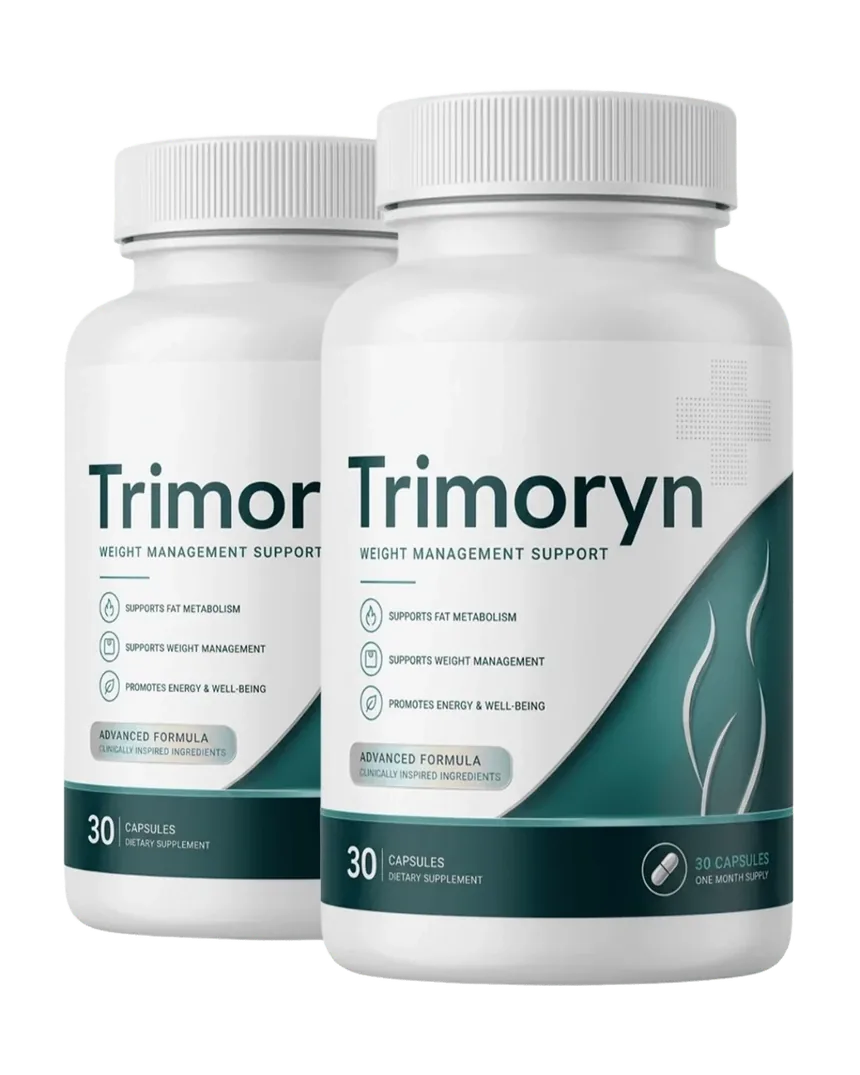
You can read today's packs and the guarantee wording on the seller's page, next to the printed panel.
See today’s price and guarantee
This website is commercial and earns from orders placed through the button. Prices were read on 19 September 2026, so check the checkout.